There are moments in parenting when a child’s inner world can feel difficult to read.
She may move between sensitivity and strength, openness and withdrawal, expression and silence. At times, her emotions may feel larger than expected. At others, she may seem disconnected or unsure of herself.
As parents, we naturally try to understand.
We look for reasons, strategies, and solutions.
But what if there is another way to see what is unfolding?
A Different Lens for Understanding Development
Across many wisdom traditions, the natural world has long been understood as a mirror for human development. Animals, in particular, express qualities that are instinctive, embodied, and true to their nature.
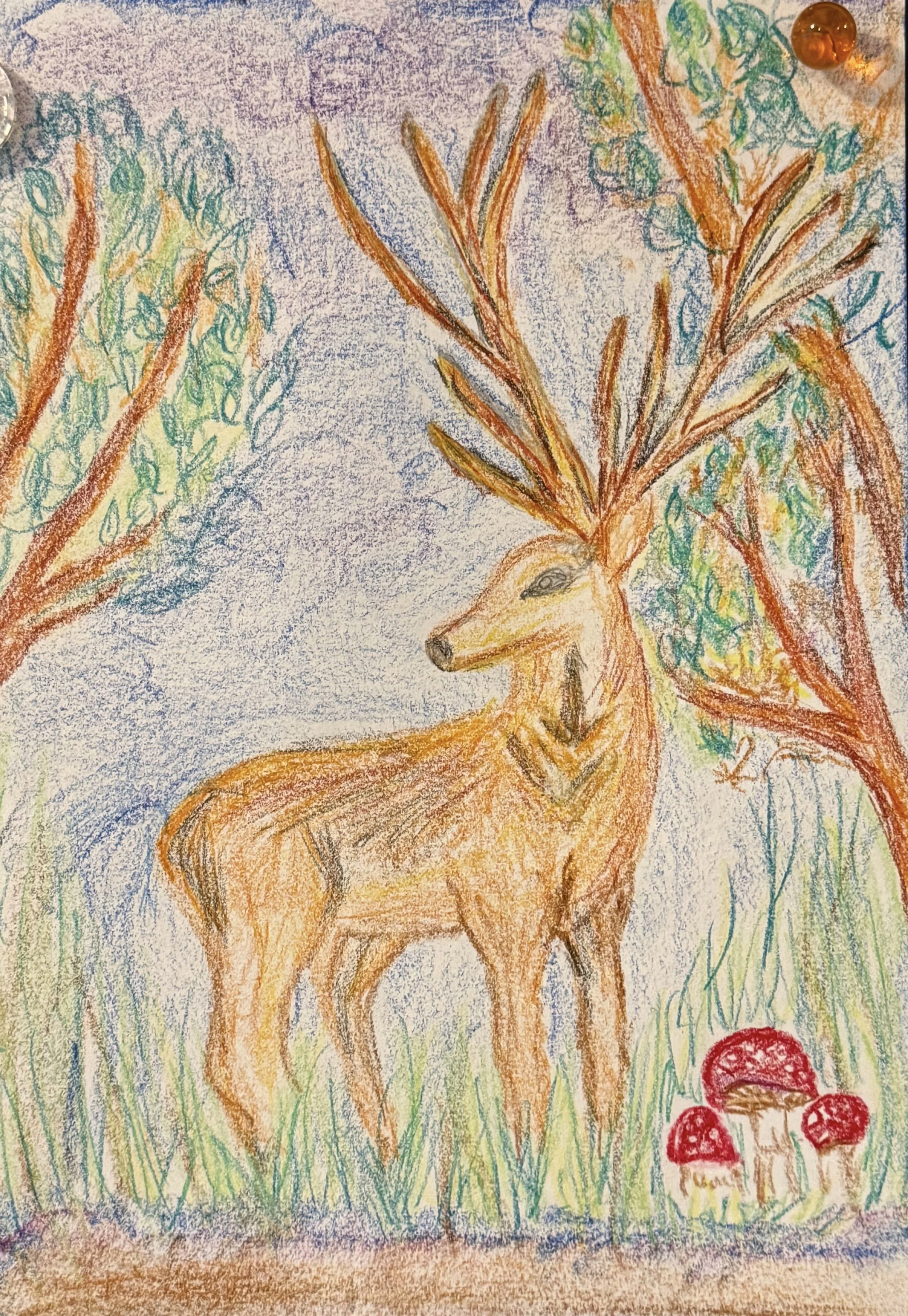
A deer does not question its sensitivity.
A lion does not doubt its strength.
A bird does not hesitate to use its voice.
These qualities—sensitivity, courage, expression, awareness—are not only found in the animal world. They are also developing within your child.
When we begin to observe children through this lens, a subtle but important shift occurs.
Instead of asking:
“How do I change this behavior?”
We begin to ask:
“What is trying to develop within my child right now?”
This shift moves us out of correction and into relationship.
Out of reaction and into awareness.
Why Animals Matter for Children
Children naturally relate to animals.
They recognize something in them that feels familiar—something honest, unfiltered, and alive. Animals offer children a way to understand themselves without needing complex language or explanation.
Through animals, children can:
Recognize their emotions
Explore different aspects of their personality
Develop empathy and connection
Feel a sense of belonging within the natural world
For parents, animals can also offer a powerful framework for understanding the stages of development unfolding within a child.
A Developmental Map: The 7 Animal Thresholds
This framework draws from both somatic awareness and developmental patterns found in the body. Each stage reflects a layer of growth that children move through—not in a strictly linear way, but as an ongoing process of integration.
You may begin to recognize your child in one or more of these stages.
Root — Earth Animals
Belonging · Safety · Grounding
At this stage, a child is developing a sense of safety in her body and in the world around her.
You may notice:
A need for routine and consistency
Sensitivity to environment or change
A desire for physical closeness or reassurance
Support as a parent:
Create rhythm, predictability, and a sense of home. Time in nature, especially on the earth —digging, building, being physically grounded—can be deeply regulating.
Sacral — Water Animals
Emotion · Creativity · Connection
Here, emotional awareness and relational sensitivity begin to expand.
You may notice:
Big or shifting emotions
A desire for connection and friendship
Creative expression through art, movement, or play
Support as a parent:
Allow space for feelings without needing to fix them. Encourage creative outlets and model healthy emotional expression.
Solar Plexus — Desert Animals
Courage · Boundaries · Identity
At this stage, a child begins to develop a sense of self and personal power.
You may notice:
Testing boundaries
Strong preferences or opinions
Moments of confidence alongside self-doubt
Support as a parent:
Offer clear, respectful boundaries while allowing choice where appropriate. This is where children learn both autonomy and responsibility.
Heart — Forest Animals
Empathy · Compassion · Relationship
The heart stage brings a deepening awareness of others.
You may notice:
Sensitivity to others’ feelings
A desire to care for people or animals
Moments of deep connection and, at times, emotional overwhelm
Support as a parent:
Help your child develop both empathy and healthy boundaries. Connection is important—but so is maintaining a sense of self.
Throat — Communication & Expression
Voice · Truth · Listening
Here, children are developing their ability to express themselves clearly and authentically.
You may notice:
A strong desire to be heard
Experimentation with language and expression
Frustration when they cannot articulate what they feel
Support as a parent:
Listen fully. Create space for your child to speak without interruption or immediate correction. Model clear and respectful communication.
Third Eye — Inner Awareness
Imagination · Intuition · Insight
At this stage, a child’s inner world becomes more vivid and meaningful.
You may notice:
A rich imagination
Insightful or surprising observations
Sensitivity to subtle dynamics in people or environments
Support as a parent:
Honor imagination without dismissing it. Provide quiet space for reflection, creativity, and independent thought.
Crown — Integration & Meaning
Wholeness · Perspective · Identity
This stage reflects moments when a child begins to integrate her experiences into a sense of self.
You may notice:
Thoughtful questions about life or meaning
A desire to understand her place in the world
Emerging self-awareness
Support as a parent:
Engage in open conversation. Allow questions without rushing to provide answers. This is where deeper understanding begins to take shape.
Moving from Control to Connection
When we view development through this lens, parenting becomes less about managing behavior and more about recognizing patterns of growth.
A child is not “being difficult”—
she may be learning how to hold her boundaries.
She is not “too sensitive”—
she may be developing empathy and awareness.
She is not “withdrawn”—
she may be processing her inner world.
This perspective does not remove the need for guidance or structure.
But it changes how that guidance is offered.
A Practice of Observation
One of the most powerful shifts a parent can make is to begin observing before interpreting.
To notice:
What is present
When it arises
How it moves or changes
Without immediately labeling it as good or bad.
This kind of observation creates space—
and within that space, insight begins to emerge.
A Return to Relationship
The natural world does not rush development.
It does not force change.
It responds, adapts, and unfolds over time.
When we begin to parent with this same awareness, something softens.
We become less focused on shaping our child into who we think she should be, and more attuned to who she already is—and who she is becoming.
Animals offer us a way back to this understanding.
Not as a concept, but as a living, observable truth.
An Invitation
If this way of seeing resonates with you, it can be deepened.
Learning to recognize these patterns, to support them in real time, and to guide your child with both clarity and sensitivity is a process—one that becomes more intuitive with practice.
This work is not about doing more.
It is about seeing differently.
And from that shift in perception, everything begins to change.